instagram facebook
Powered by Blogger.
  • About Us
  • Natural Dyes
  • Stores & Hours
  • maiwa.com
  • School of Textiles
the MAIWA JOURNAL

[2014 Symposium registration opens June 23 at 10am.]

2014 Maiwa Textile Symposium
Workshop The Architecture of Ideas
Michael Brennand-Wood

$150 includes 20 lab fee
Sept 20 - Class Limit 14
Maiwa Loft: Above the Net Loft, Granville Is. Vancouver BC


How do we build an idea? What is the foundation? What do we build with? And how do we know when the process is unstable ... or complete?  

As makers (in textiles or any other media), we construct with materials, but equally we can build a concept. The Architecture of Ideas is a stand-alone workshop with a specific focus on how to build on an idea. 

The goal will be to work with a new confidence in the conceptual realm. Participants will be empowered to evolve personal, creative strategies for the origination and development of ideas.

Students will select from an extensive series of visual and conceptual references. They will then be encouraged to configure, to contextualize, and to add or subtract imagery. Threads and patterns of thought will be presented, discussed, and critiqued via a rolling program of dialogue and critique.

This workshop will provide a rare opportunity to work closely with accomplished UK artist and curator, Michael Brennand-Wood in an intimate classroom environment.


Tuesday, April 22, 2014 No comments
[2014 Symposium registration opens June 23 at 10am.]

2014 Maiwa Textile Symposium
Workshop Overlays
Michael Brennand-Wood

$295 includes 45 lab fee
September 18, 19 - Class Limit 14
Maiwa Loft: Above the Net Loft, Granville Is. Vancouver BC


Layering is an important aspect of both history and archeology. We build and we erase, we add and subtract, continually evolving new meanings and insights. By moving these ideas of accretion and removal into the textile world, students will gain new strategies to create and modify their work.

Each participant will create a personal two-dimensional laminate of imagery, incorporating tensioned layers of cloth with collage, stitch, paint, and other mixed media. Once assembled each layer will be selectively cut back to reveal layers of information and meaning. 

Frames will be provided along with opaque and translucent fabrics in differing weights. 

Participants will bring objects or found elements that can be inserted within layers of suspended cloth. Objects may be stones, toys, natural or mechanized parts, books, pages, photos, tools, new or old components, anything that might be creatively veiled and covered with fabric.

Imagery might be obscured, erased, overlaid, cut, veiled, or removed through techniques of cut work, appliqué, shadow quilting, darning, mending, or gathering.

Critique and group discussion will be an important component of this course. Participants need to be open-minded and willing to experiment with concepts and media. They will be encouraged to develop original solutions in relation to the core aims of the workshop; this is not a technical or prescriptive course.  

Emphasis will be placed on the investigation and research of personal imagery and the development of related technical innovation, ideas that can be developed at a later stage. 

Teaching will largely be on a one-to-one basis. At the close of the workshop, Michael would like to have a group evaluation to discuss what has been achieved. The purpose of this final session is to share outcomes and to set a personal agenda to be continued and developed back in  your home studios.

This workshop is a special opportunity to work directly with Michael Brennand-Wood, an internationally acclaimed artist, curator, and speaker from the UK. 


Tuesday, April 22, 2014 No comments
[2014 Symposium registration opens June 23 at 10am.]

2014 Maiwa Textile Symposium
Workshop Feltmaking
Rene Evans

$250 includes 85 lab fee
September 17, 18,  - Class Limit 14
Maiwa East: 1310 Odlum Drive, Vancouver BC


Felt is one of the oldest known forms of manipulated fibre. Felting appears coincidental with animal husbandry and produces a range of items from clothing and toys to sculpture, tents, and even industrial tools. Often an art and tradition of nomadic peoples, felting is making a worldwide resurgence and is gaining recognition.

In this two-day, project-oriented workshop, students will explore the many aspects of felt, from three-dimensional hats, boots, and bags to warm felt coats and lightweight, gossamer “nuno” felts. Students will learn basic feltmaking techniques by creating a sample binder of felts of different weights and felts from different wool fibres. They will select a final project which can be a three-dimensional project (such as a hat, bag, boots), flat felt yardage, or “nuno” yardage (such as scarf or vest fronts). The techniques learned in the workshop can be applied to all felted projects.


Tuesday, April 22, 2014 No comments

[2014 Symposium registration opens June 23 at 10am.]

2014 Maiwa Textile Symposium
Workshop One Pot Palette - Plant Fibres
Danielle Bush & Sophena Kwon

$250 includes 85 lab fee
September 15, 16 - Class Limit 14
Maiwa East: 1310 Odlum Drive, Vancouver BC


No palette can match the harmony and subtle beauty of natural dyes. In this workshop we will explore that potential using the One Pot Palette, a technique that conserves water, dye material, and space.

Students will work with cotton, hemp, and linen yarns. With plant fibres, we will learn the magical potential of using mordants and tannins before dyeing. We will also look at the different effects that can be achieved by adding mordants and tannins after dyeing. While working through a palette, students will also learn how to achieve tone on tone and colour gradations.

The class will cover the fundamental principals of natural dye use as well as the tools and techniques to intuitively work through their own one pot palette. 

Students will leave the workshop with a generous stash of yarns in different plant fibres that can be used toward  a future project. 

Instructor Bios:

Danielle Bush is on staff at Maiwa Supply and one of our instructors. Her career in textiles began with sewing and fashion studies at the University of the Fraser Valley. Upon completing courses in design, drawing, drafting, and construction, she was accepted to Maiwa Handprints to do a week-long practicum in the textile collection. In her words: “It changed my life.” 

A veteran assistant for numerous workshops, Danielle is also the Maiwa sample dyer. In 2009 Danielle represented Maiwa at the ISS (shibori conference) held in France, and in 2011 she was a facilitator for the Maiwa Natural Dye Master Class taught by Michel Garcia in Bengal, India. Showing a natural understanding and aptitude for dye techniques, Danielle is a welcome addition to our roster of instructors.

Sophena Kwon has grown up with Maiwa as a family business. In 2009 she studied with Michel Garcia in France, in 2010 and 2011 she assisted with the natural dye workshops in Peru and India. In 2012 she co-taught with Charllotte Kwon at the Penland School of Crafts and in 2013 she assisted in natural dye troubleshooting at the Living Blue Cooperative in Bangladesh. In addition to her natural dye work she is also a skilled clothing designer and photographer.

Sunday, April 20, 2014 7 comments

[2014 Symposium registration opens June 23 at 10am.]

2014 Maiwa Textile Symposium
Workshop One Pot Palette - Animal Fibres
Danielle Bush & Sophena Kwon

$250 includes 85 lab fee
September 13, 14 - Class Limit 14
Maiwa East: 1310 Odlum Drive, Vancouver BC


Are you an apartment dyer? Working with natural dyes in a tiny studio? Or are you looking for a way to conserve water, dye matter, and mordants? The One Pot Palette is for any of these, and for anyone who wants to lay down natural colour on yarns.

In this workshop, students will work with an assortment of silks as well as wools from different sheep breeds. There are a variety of clever techniques (both additive and subtractive) to get a range of very different colours out of a single dyepot.  Students will learn the fundamental principals of natural dyes as well as the tools and techniques to intuitively work through their own one pot palette. 

Students will leave the workshop with a generous stash of yarns in different animal fibres that can be used to complete a future project. 


Instructor Bios:

Danielle Bush is on staff at Maiwa Supply and one of our instructors. Her career in textiles began with sewing and fashion studies at the University of the Fraser Valley. Upon completing courses in design, drawing, drafting, and construction, she was accepted to Maiwa Handprints to do a week-long practicum in the textile collection. In her words: “It changed my life.” 

A veteran assistant for numerous workshops, Danielle is also the Maiwa sample dyer. In 2009 Danielle represented Maiwa at the ISS (shibori conference) held in France, and in 2011 she was a facilitator for the Maiwa Natural Dye Master Class taught by Michel Garcia in Bengal, India. Showing a natural understanding and aptitude for dye techniques, Danielle is a welcome addition to our roster of instructors.

Sophena Kwon has grown up with Maiwa as a family business. In 2009 she studied with Michel Garcia in France, in 2010 and 2011 she assisted with the natural dye workshops in Peru and India. In 2012 she co-taught with Charllotte Kwon at the Penland School of Crafts and in 2013 she assisted in natural dye troubleshooting at the Living Blue Cooperative in Bangladesh. In addition to her natural dye work she is also a skilled clothing designer and photographer.
Sunday, April 20, 2014 No comments

[2014 Symposium registration opens June 23 at 10am.]

2014 Maiwa Textile Symposium
Workshop The Stitch that Tells a Story (offered twice0
Janet Bolton

$295 includes 50 lab fee
First Class - September 14, 15 - Class Limit 15
Second Class - September 16, 17 - Class Limit 15
Maiwa Loft: Above the Net Loft, Granville Is. Vancouver BC


Cloth and stitch combine with a deceptive simplicity in this workshop taught by UK textile artist Janet Bolton. 

Famous for her evocative textile pictures that convey the feeling of storybook illustrations, Janet aims to give each student the confidence to work directly with the fabrics at hand. That is, with an idea in mind, the student will select textures and colour combinations from available fabrics rather than working out a composition in another medium (painting or drawing) and then attempting to transpose that concept into fabric.

The class will discuss compositional ideas, subject matter, and the choice of suitable materials both old and new. Students will explore the idea of allowing the composition to develop and change as the work progresses, emphasizing the wonderful freedom and directness this way of working allows—right to the very last stitch. Janet will demonstrate “needle turning” techniques used to finalize the shape of the different components, the placing of those components, and the use of thread as a drawn line.

Janet will bring originals of her own work and a selection of pieces at different stages of development. She will also have various pieces that in her opinion have not been successful; these have led to many an interesting discussion!

The actual techniques are very simple: hand sewing at all stages. Each student will be given as much individual help as they need, particularly at the early compositional stage. After the general introduction, the whole emphasis will be on individual tuition.

The workshop will include advice on presentation of work, including framing, and will end with a group discussion on the works produced.


Friday, April 18, 2014 No comments

[2014 Symposium registration opens June 23 at 10am.]

2014 Maiwa Textile Symposium
Workshop Narrative Textiles
Janet Bolton

$195 includes 35 lab fee
September 13 - Class Limit 15
Maiwa Loft: Above the Net Loft, Granville Is. Vancouver BC


This workshop is a comprehensive introduction to UK textile artist Janet Bolton’s direct way of working. The freedom that characterizes this technique permits students to explore their own likes and dislikes and find their own voices.

Although there will not be time to completely finish a piece, all necessary aspects, including presenting and framing the work, will be covered.

The workshop will start with a short slide show of Janet Bolton’s work. From there the class will discuss inspiration from the choice of suitable subject matter to the idea of allowing the work to change throughout its construction. The result is a way of working that is exciting to the last stitch.

Practical demonstrations of constructional methods, simple cutting of shapes, placing, and “needle turning” techniques augment the workshop.

All work is sewn by hand. Students will receive personal help throughout the workshop; this individual help is most important as there are no rules, no “correct” way of working. There is no right or wrong.

The class will finish with a group discussion of the pieces. Students will leave the class with an exciting work in progress, confident that they can complete the piece.


Friday, April 18, 2014 No comments
[2014 Symposium registration opens on June 23rd at 10am.]


2014 Maiwa Textile Symposium
Workshop Natural Dyes
Charllotte Kwon

$495 includes $120 lab fee
September 9, 10, 11, 12 - Class Limit 16
Maiwa East: 1310 Odlum Drive, Vancouver BC


What magic does the dyer use to coax colour from nature? Throughout the world this knowledge was guarded carefully, and learning the art often involved elaborate ceremonies and traditions. To this day, natural dyeing retains the same air of mystery and exotic intrigue that has compelled artists and craftspeople for centuries. 

Charllotte Kwon’s passionate study of natural dyeing techniques has led her to visit and work with cultures around the world. In this workshop she shares her vast knowledge of natural dye history and use. In addition Charllotte offers insight into her own in-studio processes and demonstrates how to get the most from a range of dyes and fabrics. The student will obtain a good technical understanding of the mordanting processes and the varied uses of such dyes as indigo, cochineal, madder, fustic, and many others. Gorgeous Turkey reds, indigo blues, and Indian yellows are just a few of the colours achieved as students work on cotton, silks, wools, and linen.

The full spectrum of more than 80 rich colours dyed in class will form a source book for each student. These books are a great inspiration and reference for years to come. Students will also complete several natural-dye projects. A variety of shibori techniques will be used and then dyed with natural indigo.

This popular class has now been expanded to four full days. 

This is a practical workshop with many vats and some lifting. As we like to put it: if you can get your suitcase on an international flight—you should be fine.


Instructor Bio

Charllotte Kwon is the owner of Maiwa Handprints Ltd. and the director of the Maiwa Foundation. Through Maiwa, Charllotte also runs a textile archive and research library located on Granville Island. Under her direction Maiwa has produced four documentary films and a number of print publications. She also guides Maiwa’s substantial web presence.

Charllotte travels extensively each year to research handcraft and to supplement her natural-dye research. Always looking to extend natural dye use, she also teaches dyeing workshops with artisans around the world and has planned a series of natural dye master classes to bring exceptional practising artisans together.
Friday, April 18, 2014 No comments
[2014 Symposium registration opens on June 23rd at 10am.]

2014 Maiwa Textile Symposium
Workshop Creative Map Making
Valerie Goodwin

$495 includes 65 lab fee
September 8, 9, 10, 11, 12,  - Class Limit 14
Maiwa Loft: Above the Net Loft, Granville Is. Vancouver BC


Cross-fertilization between disciplines can enrich how an artist approaches her work. This workshop will focus on the basic principles of graphic composition used by many architects. Students will learn to create rich and complex arrangements using principles of scale, merging, layering/overlapping, ranking, and framing. 

Beginning with a series of quick exercises, students will gain a grounding in the fundamentals of composition and begin employing the elements and principles of design. 

Valerie Goodwin will work closely with students, guiding them to more advanced explorations that afford opportunities to experiment and invent. Valerie is well known for creating a flexible environment of encouragement, order, and inspiration. 

Building on these creative foundations, students will tap into the right and left sides of the brain to design a thoughtful and imaginative composition from a distinctive perspective. Each student will create a cartographic art quilt that tells the story of a particular place.

Valerie Goodwin joins us from the USA.


Friday, April 18, 2014 No comments

The first items from our 2014 visit to India ...
have just arrived. 

Above, a set of old brass market scales. The balance beam is approximately 2 feet long. These scales would have been used to weigh produce or anything else you might find in a public market. $249.00.

Below left, A set of market scales with bowls. The beam on this set is approximately 18 inches. $149.00. Below right a set of market scales with a cast iron beam. Beam length approximately 24 inches. $199.00.

Under these scales are some cast iron weights. These have seen a lifetime of use and are stamped with the location of the foundry where they were made. These weights are various sizes and range from $19 - $89.


Below, one of the most fascinating items we've ever seen. A heated tiffin carrier. The top of the main canister contains a stack of four tiffin pots. The bottom compartment has a hinged door that can be opened to reveal a drawer that would be filled with live coals. The top container is sealed and so could have water added to make a kind of travelling steam table. The wooden handles of this unit have a nice used feeling and the entire set-up is a marvel of fitted brass. The top cover has an indication of where the unit was made. Not presently food safe. $549.00


Maiwa East is an eclectic collection of furniture, found objects, antiques, and architectural pieces from India. It also features a limited selection of Maiwa's famous textiles. 

Drop by and see what we have for you.

Open Thursday - Saturday
10am - 5 pm
Open Sunday
11am - 5pm

1310 Odlum Drive
Vancouver Canada
www.maiwaeast.com


Thursday, April 17, 2014 No comments
[2014 Symposium registration opens June 23 at 10am.]

2014 Maiwa Textile Symposium
Workshop Katazome 
Prof Masayoshi Ohashi and Reiko Sudo

$295 includes 80 lab fee
September 6, 7 - Class Limit 16
Maiwa East: 1310 Odlum Drive, Vancouver BC


Professor Masayoshi Ohashi studied under the direct tutelage of Japan’s first Living National Treasure, Keisuke Serizawa, and has since gone on to research and transmit traditional Japanese dyeing techniques to new generations. 

Students will learn Keisuke Serizawa’s stencil-dyeing techniques using pigments on washi paper and natural indigo on fabric. First they will learn how to prepare sheets of mulberry paper for use as a stencil. They will then be taught the variety of techniques to create a successful stencil: cutting, the use of punches, and proper placement and design of imagery. 

The class will proceed to reinforcing the stencil with fine silk netting. This is an art in itself, but a carefully made stencil, if treated properly, will last the artisan for many years. The workshop will conclude with paste resist and printing with the stencils.

This is a rare opportunity to connect with the lineage of Japanese master artisans. The course is co-taught by Reiko Sudo, of the famous Nuno Corporation, an innovator in fabric design and fashion.


Tuesday, April 15, 2014 No comments
[2014 Symposium registration opens June 23 at 10am.]

2014 Maiwa Textile Symposium
Workshop Ingenious Pattern - Rust and Itajime
Prof Masayoshi Ohashi and Reiko Sudo

$295 includes 60 lab fee
September 4, 5  - Class Limit 16
Maiwa East: 1310 Odlum Drive, Vancouver BC


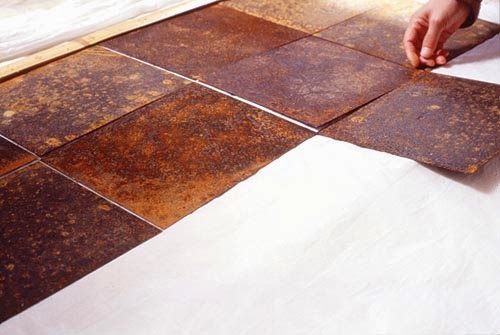
This workshop teaches two separate techniques: rust dyeing and itajime clamp resist.

Rust Dyeing: rust comes from within. So says a Japanese proverb. But there is a sublime, extraordinary potential in the colours made as iron oxidizes. 

When the process of rust is creatively combined with textiles, a beautiful world of texture and possibility is created. This world has been thoroughly explored by master textile designer Reiko Sudo. In this workshop Reiko will take students through the process that she herself has used to create her fantastic exhibition work “Scrapyard.”


Itajime Clamp Resist: Archaeologists have found scraps of tie-dyed cloth at ancient sites the world over. The basic idea is so simple. Shibori techniques seem to have occurred quite naturally to people at independent places and times (perhaps from observing how tightly twisted or knotted items stayed dry even when soaked).  Methods gradually diversified as they spread. Equally widespread, methods of extracting colour from plants and other natural materials to dye yarns and cloth have been around since ancient times.

The two notions were easy to connect: water could carry beautiful colours almost anywhere, but how to stop it from staining certain places so as to make patterns? Constricting kept fibres dry where pressed tight, so why not tie threads and fabric selectively to resist dyeing?

In Japan, shibori dyeing traces back to the 6th or 7th century. From the Edo period (1600s) into the early modern Meiji era, a boom in indigo dyeing also encouraged the development of many different indigo shibori techniques. One of them is itajime-shibori “board-clamped dyeing” whereby cloth is folded up and pressed between squared or triangular boards, then dipped in dye baths to yield beautiful geometric patterns.

From Japan, the country of origami paper folding, we bring you an original way to dye fabric. This is a rare opportunity to connect with the lineage of Japanese master artisans. The course is co-taught by Reiko Sudo, of the famous Nuno Corporation, an innovator in fabric design, and Professor Masayoshi Ohashi, who studied under the direct lineage of Japan’s first Living National Treasure, Keisuke Serizawa.


Tuesday, April 15, 2014 No comments
[2014 Symposium registration opens June 23 at 10am.]

2014 Maiwa Textile Symposium
Workshop The Sudo Salon
Reiko Sudo

$100 includes 20 lab fee
September 3,  - Class Limit 18
Maiwa Loft: Above the Net Loft, Granville Is. Vancouver BC


Under the directorship of Reiko Sudo since 1987, the Nuno Corporation has been responsible for making some of the most innovative textiles the world has ever seen. Rethinking both high- and low-tech approaches to cloth, Nuno took apart the very idea of fabric. When it was reassembled, Nuno had created unheard of textures, patterns, and forms. 

The Sudo Salon is an opportunity to spend an intimate day with Reiko Sudo as she explains the conditions that enabled the Nuno Corporation to come into being and the philosophy that inspired them to master a range of experimental approaches. 

Reiko Sudo will speak about the range of disciplines that come together in fabric design and some of the strategies that have been successful. In addition Reiko Sudo will have samples from her textile collection on hand.


Tuesday, April 15, 2014 No comments

Hard to believe that it was in 2004 that we started the first Maiwa Textile Symposium. That year we began with an ambitious set of workshops, lectures, and events. It was a good start. With each passing year we have added a little more and reached a little higher.

This year marks the 10th anniversary. We have a spectacular line-up for you.
The postings for the 2014 Maiwa Textile Symposium start today!

Tuesday, April 15, 2014 1 comments
These are just some of the cabinets at Maiwa East.
We have many rows of cabinets in our warehouse space. Each piece is unique. Some are old, some are remade from salvaged hardwoods. All have personality. 

A small one-shelf cabinet with two glass doors.
This one has acquired much character as its three layers of paint wore away. 
It is a cheerful addition to any space. Aprox 24" x 12" x 20" $399.00

 Solid teak cabinet with two doors. 
Aprox 4'6" tall, 28" wide 12" deep. $649.00


  An elegant and sophisticated cabinet. 
4 shelves, two doors. each with two windows. 
Aprox 5'10" tall 24" wide, 12" deep.  $699.00


A fantastic cabinet with blue-mauve paint. 
It would fit niecly into Frieda Kahlo's room. 
Aprox 4' tall 28" wide and 10" deep. $649.00 


 This unusual piece has a lovely interior patina. 
The back of the cabinet is made from a salvaged sheet-metal road sign. 
Turned feet set this piece apart. Aprox 5'3" tall, 28" wide 10" deep. $699.00

A beautiful, dark, solid-wood dresser. 4 voluminous drawers. 
The detailing on this piece harkens back to another era. 
Aprox 36" tall x 36" wide by 15" deep. $699.00

Another painterly piece. 
Two shelves, one door with two glass windows. 
Aprox 28" tall, 15" wide and 15" deep. $399.00


Maiwa East

Open Thursday - Saturday
10am - 5 pm
Open Sunday
11am - 5pm

1310 Odlum Drive
Vancouver Canada
www.maiwaeast.com


Wednesday, April 02, 2014 No comments
In our previous post we talked about our February visit to the weavers of the Artisan's Alliance of Jawaja (AAJ). Shortly after that we received a visit from the leatherworkers who got on a bus and came to visit us at our studio in India. The problem they outlined is this.

The Jawaja cooperative works in a village near Bearwar, Rajasthan. The preparation of hides and the tanning process is done inside the village.

Stitching the hides in preparation for the tanning process.
De-haired hides are tanned, Jawaja 2002.
This process can be a smelly one. As the surrounding settlements have moved closer to Jawaja's village, landowners who hope to develop and sell properties have complained about the smell. The government has responded by sending notice to the artisans telling them to either stop the process or to relocate it to industrial land.

Members of AAJ have pooled their resources and purchased five acres of land next to their "go-down" (warehouse). This is the warehouse that houses our visits each time we meet the artisans.

Artisans Alliance of Jawaja meeting Maiwa inside their "go down", 2011.
With the land purchased, the co-operative has no funds left to build the necessary facilities. The group visited Maiwa and made an appeal for help. They need to construct cement tanks and drill a bore-well. The group hopes that by completing the work quickly they will not need to stop production.

The Maiwa Foundation will be sending out a direct appeal for this project. If you would like to help, please visit our donation page here: http://www.maiwa.com/home/books/foundation/index.html

The construction of new tanks comes at a good time. Students in the Applied Science 263 course at the University of British Columbia, have looked at alternative de-hair processes for the artisans. We will provide more information about that collaboration and an update on some of the projects APSC 263 has been involved with in a future post.

More information about the Maiwa Foundation can be found on our site.
Saturday, March 29, 2014 No comments
In early February of 2014, Maiwa visited the Artisan's Alliance of Jawaja. There are both leatherworkers and weavers in AAJ and we spent time with both. The highlight of the trip was the arrival of Salt Spring Island weaver Jane Stafford who, at her own expense, shipped a table loom to India to donate to the weavers.

Unpacking the loom.

Jane sets up the loom and explains to Okar Lal Meghwal how it differs from his regular carpet loom.
Mahesh Dosaya (in the white sweater) acts as interpreter.

Working on the small table loom. 

There were many aspects to Jane's donation. Okar Lal Meghwal usually works on a very large carpet loom that looks like this:

Okar Lal Meghwal working on his carpet loom in his house.
To prepare a warp for the carpet loom is a considerable investment in time, yarns, and effort. In contrast the table loom can be set up in a fraction of the time. The weavers can experiment with weave structures and pattern techniques on the small loom and then transfer their knowledge to their carpet looms.

The artisans of Jawaja are production weavers. It is very difficult for them to take an entire loom out of production to try a new technique. As with any artisan, the loss of a loom means the loss of a livelihood. With the small table loom they can keep their production going.

The table loom had another unexpected advantage. If they are showing their weavings at trade shows, the Jawaja weavers can now set up the small table loom and demonstrate how they work at the show. This has resulted in greater understanding of hand-weaving for the public and better sales for the weavers. Jane is very familiar with the public's reaction to learning how hand-weaving is done: "You show people what goes into making a piece of cloth and they are staggered. We are so disconnected - even in India - from the knowledge of how things are made."

What was it like bringing a loom all that way and unpacking it in the centre of the village? Jane relates: "It was like the birth of a child! The entire village showed up and were intensely curious. It was a huge event - I was not really prepared for the scale of it. They were very very grateful. I think it meant as much to me as it did to them."

Our visit made such a stir that the local paper sent a report and wrote a story about it. You can make out Jane Stafford and her loom in the photo below. The other picture shows Maiwa staff Sophena Kwon sharing a shawl with one of the women from the AAJ co-operative. A feature in the local paper does much to raise the status of the Artisan's Alliance of Jawaja within their own community.

click for enlargement

click for enlargement
We carry the Jawaja carpets and a selection is available online here.

Jane Stafford's donation took place as Maiwa brought a group to meet the members of AAJ. The donation has inspired one of the people on that visit, Shanna Fromson, to make a similar donation. 

Next up - part two: a visit with the leatherworkers.
Thursday, March 27, 2014 No comments
Click to view larger

We do a lot of natural dyeing at Maiwa. Much of what we do involves testing natural dyes and natural dye extracts. We test to see how they behave; both alone and when combined with mordants and other dyes. These tests result in a myriad small samples. We find that they are quite informative either alone or in the larger schematic of what we are testing. So, for example, above we have gone from Dyer's Broom to Lac in increments of 5%. The top is only Dyer's Broom at 8% WOF. The bottom is only lac at 5% WOF. We did the tests on wool, rayon, silk, cotton (mercerized), and cotton (boiled). 

If you are admiring the test samples, the beautiful colour and the exquisite way in which they are balled and labeled, you are probably admiring the work of Linda Spence. Linda is often found in the Maiwa dye studio with a row of pots simmering. She is very careful and thorough - good qualities when you are putting together an array of test samples.


Linda pulls some colour from the pot.


Monday, March 24, 2014 3 comments

A Style for all your Senses
MAIWA EAST

An Oasis of Interior Design 

An English enamelled pot. "JUDGE" WARE. These came to us by way of India.
Beautiful black finish - perfect for warming your mulligatawny ($129.95 - $149.95).
 It rests on a vintage Indian kantha quilt (149.95).


Hammered copper vessel.
The finish of this item recalls each blow of the artisan's hammer - a wonder of craftsmanship and
a pleasure to hold ($499.95). It rests on a vintage Indian kantha quilt (149.95).

Two white enamelled cups ($12.95 each) sit on a black marble platter.
The platter - as heavy as the rock it was cut from, is a marvel of the stonecutter's art ($249.00).
Both items sit on a vintage Indian kantha quilt (149.95).

A small brass bucket ($69.95) is filled with the small bells ($1.95 each)
made by artisans from the Kutch desert. The bellmakers are justifiably famous - for they can
make a bell to suit any herd animal. Moreover they can tune the bell so that you can tell
your goats apart from the goats of the other shepherds. 


Maiwa East

Open Thursday - Saturday 10 - 5
Open Sunday 11 - 5

1310 Odlum Drive, Vancouver, Canada

Thursday, February 27, 2014 No comments
Newer Posts
Older Posts

Subscribe to our mailing list

* indicates required
Send me emails about Maiwa

Labels

Bags & Pouches Bandanas Banjara Bedding Bengal Weaving Block Print Dyeable Blanks Dyeable Clothing Embroidery Embroidery Supplies Exhibition Free Resources Handwoven Interiors Jawaja Carpets Jawaja Leather Kala Cotton Lecture Maiwa Books Maiwa Foundation Maiwa School of Textiles Merchant & Mills Natural Dye Kits Natural Dyes Quiet Manifesto Quilts & Blankets Scarves & Shawls Slow Clothes Table Cloths & Napkins Travel Yardage indigo

About Maiwa

Find out Who We Are ...

Voices On Cloth

Maiwa Podcasts


Maiwa Podcasts

Follow Us

Popular Posts

  • Natural Dyes - About The Organic Indigo Vat
    The Maiwa Guide to Natural Dyes What they are and how to use them These organic vats were originally developed by French dye chemist and...
  • Natural Dyes - Mordants Part 1
    The Maiwa Guide to Natural Dyes What they are and how to use them We've divided the section on Mordants into three parts. We start...
  • Natural Dyes - Scouring
    The Maiwa Guide to Natural Dyes What they are and how to use them Proper scouring is absolutely essential to good dyeing. Improperly sc...
  • Natural Dyes - Mordants Part 3
    The Maiwa Guide to Natural Dyes What they are and how to use them Cotton mordanted with alum. How To Mordant Here we give the pro...
  • Natural Dyes - Mordants Part 2
    The Maiwa Guide to Natural Dyes What they are and how to use them In our previous post we explained why mordanting was necessary and l...
  • Natural Dyes - Indigo, The Fruit Vat
    The Maiwa Guide to Natural Dyes What they are and how to use them This post give the recipe and procedure to make an organic indigo vat...
  • Natural Dyes - Indigo
    The Maiwa Guide to Natural Dyes What they are and how to use them Natural indigo is obtained from indigo bearing plants, the most si...

Blog Archive

  • ▼  2026 (98)
    • ▼  November (7)
      • 20% Off Our Clothing Collection — Celebrating 40 Y...
      • 20% Off Natural Dye Kits, Dyeable Clothing & Artis...
      • Celebrating 40 Years of Craft — The Materials — 20...
      • Celebrating 40 years of Maiwa — 20% Off Our Shawl ...
      • 40 years of Craft – The Hands — 20% Off Our Shawl ...
      • A Quiet Manifesto – Celebrating 40 Years of Maiwa ...
      • Celebrating 40 Years of Craft – The Home — 20% Off...
    • ►  October (10)
    • ►  September (11)
    • ►  August (8)
    • ►  July (9)
    • ►  June (9)
    • ►  May (10)
    • ►  April (10)
    • ►  March (9)
    • ►  February (6)
    • ►  January (9)
  • ►  2025 (115)
    • ►  December (11)
    • ►  November (11)
    • ►  October (11)
    • ►  September (9)
    • ►  August (11)
    • ►  July (11)
    • ►  June (8)
    • ►  May (9)
    • ►  April (10)
    • ►  March (7)
    • ►  February (8)
    • ►  January (9)
  • ►  2024 (108)
    • ►  December (11)
    • ►  November (9)
    • ►  October (9)
    • ►  September (8)
    • ►  August (11)
    • ►  July (9)
    • ►  June (6)
    • ►  May (9)
    • ►  April (10)
    • ►  March (8)
    • ►  February (9)
    • ►  January (9)
  • ►  2023 (108)
    • ►  December (12)
    • ►  November (6)
    • ►  October (9)
    • ►  September (8)
    • ►  August (12)
    • ►  July (8)
    • ►  June (9)
    • ►  May (9)
    • ►  April (9)
    • ►  March (9)
    • ►  February (8)
    • ►  January (9)
  • ►  2022 (111)
    • ►  December (13)
    • ►  November (9)
    • ►  October (8)
    • ►  September (9)
    • ►  August (11)
    • ►  July (8)
    • ►  June (9)
    • ►  May (9)
    • ►  April (9)
    • ►  March (10)
    • ►  February (8)
    • ►  January (8)
  • ►  2021 (105)
    • ►  December (9)
    • ►  November (9)
    • ►  October (9)
    • ►  September (8)
    • ►  August (8)
    • ►  July (8)
    • ►  June (11)
    • ►  May (9)
    • ►  April (10)
    • ►  March (8)
    • ►  February (8)
    • ►  January (8)
  • ►  2020 (94)
    • ►  December (11)
    • ►  November (12)
    • ►  October (11)
    • ►  September (9)
    • ►  August (7)
    • ►  July (9)
    • ►  June (7)
    • ►  May (8)
    • ►  April (9)
    • ►  March (4)
    • ►  February (1)
    • ►  January (6)
  • ►  2019 (69)
    • ►  December (7)
    • ►  November (4)
    • ►  October (6)
    • ►  September (11)
    • ►  August (3)
    • ►  July (5)
    • ►  June (4)
    • ►  May (5)
    • ►  April (5)
    • ►  March (7)
    • ►  February (5)
    • ►  January (7)
  • ►  2018 (71)
    • ►  December (6)
    • ►  November (5)
    • ►  October (14)
    • ►  September (6)
    • ►  August (5)
    • ►  July (5)
    • ►  June (6)
    • ►  May (7)
    • ►  April (5)
    • ►  March (2)
    • ►  February (5)
    • ►  January (5)
  • ►  2017 (73)
    • ►  December (6)
    • ►  November (8)
    • ►  October (11)
    • ►  September (10)
    • ►  August (7)
    • ►  July (7)
    • ►  June (4)
    • ►  May (5)
    • ►  April (6)
    • ►  March (3)
    • ►  February (4)
    • ►  January (2)
  • ►  2016 (47)
    • ►  December (4)
    • ►  November (4)
    • ►  October (5)
    • ►  September (12)
    • ►  July (2)
    • ►  June (2)
    • ►  May (4)
    • ►  April (2)
    • ►  March (3)
    • ►  February (5)
    • ►  January (4)
  • ►  2015 (136)
    • ►  December (5)
    • ►  November (35)
    • ►  October (13)
    • ►  September (12)
    • ►  August (3)
    • ►  July (5)
    • ►  June (5)
    • ►  May (19)
    • ►  April (28)
    • ►  March (3)
    • ►  February (3)
    • ►  January (5)
  • ►  2014 (93)
    • ►  December (1)
    • ►  November (2)
    • ►  October (10)
    • ►  September (10)
    • ►  July (1)
    • ►  June (4)
    • ►  May (26)
    • ►  April (27)
    • ►  March (3)
    • ►  February (3)
    • ►  January (6)
  • ►  2013 (112)
    • ►  December (2)
    • ►  November (1)
    • ►  October (7)
    • ►  September (8)
    • ►  August (8)
    • ►  July (5)
    • ►  June (3)
    • ►  May (11)
    • ►  April (52)
    • ►  March (3)
    • ►  February (5)
    • ►  January (7)
  • ►  2012 (108)
    • ►  December (5)
    • ►  November (5)
    • ►  October (8)
    • ►  September (10)
    • ►  August (3)
    • ►  July (6)
    • ►  June (2)
    • ►  May (25)
    • ►  April (27)
    • ►  March (7)
    • ►  February (5)
    • ►  January (5)
  • ►  2011 (126)
    • ►  December (4)
    • ►  November (3)
    • ►  October (11)
    • ►  September (9)
    • ►  August (3)
    • ►  July (6)
    • ►  June (5)
    • ►  May (39)
    • ►  April (23)
    • ►  March (8)
    • ►  February (8)
    • ►  January (7)
  • ►  2010 (123)
    • ►  December (8)
    • ►  November (8)
    • ►  October (6)
    • ►  September (11)
    • ►  August (7)
    • ►  July (9)
    • ►  June (16)
    • ►  May (17)
    • ►  April (15)
    • ►  March (10)
    • ►  February (7)
    • ►  January (9)
  • ►  2009 (141)
    • ►  December (7)
    • ►  November (11)
    • ►  October (13)
    • ►  September (10)
    • ►  August (12)
    • ►  July (11)
    • ►  June (11)
    • ►  May (29)
    • ►  April (32)
    • ►  March (5)