instagram facebook
Powered by Blogger.
  • About Us
  • Natural Dyes
  • Stores & Hours
  • maiwa.com
  • School of Textiles

the MAIWA JOURNAL


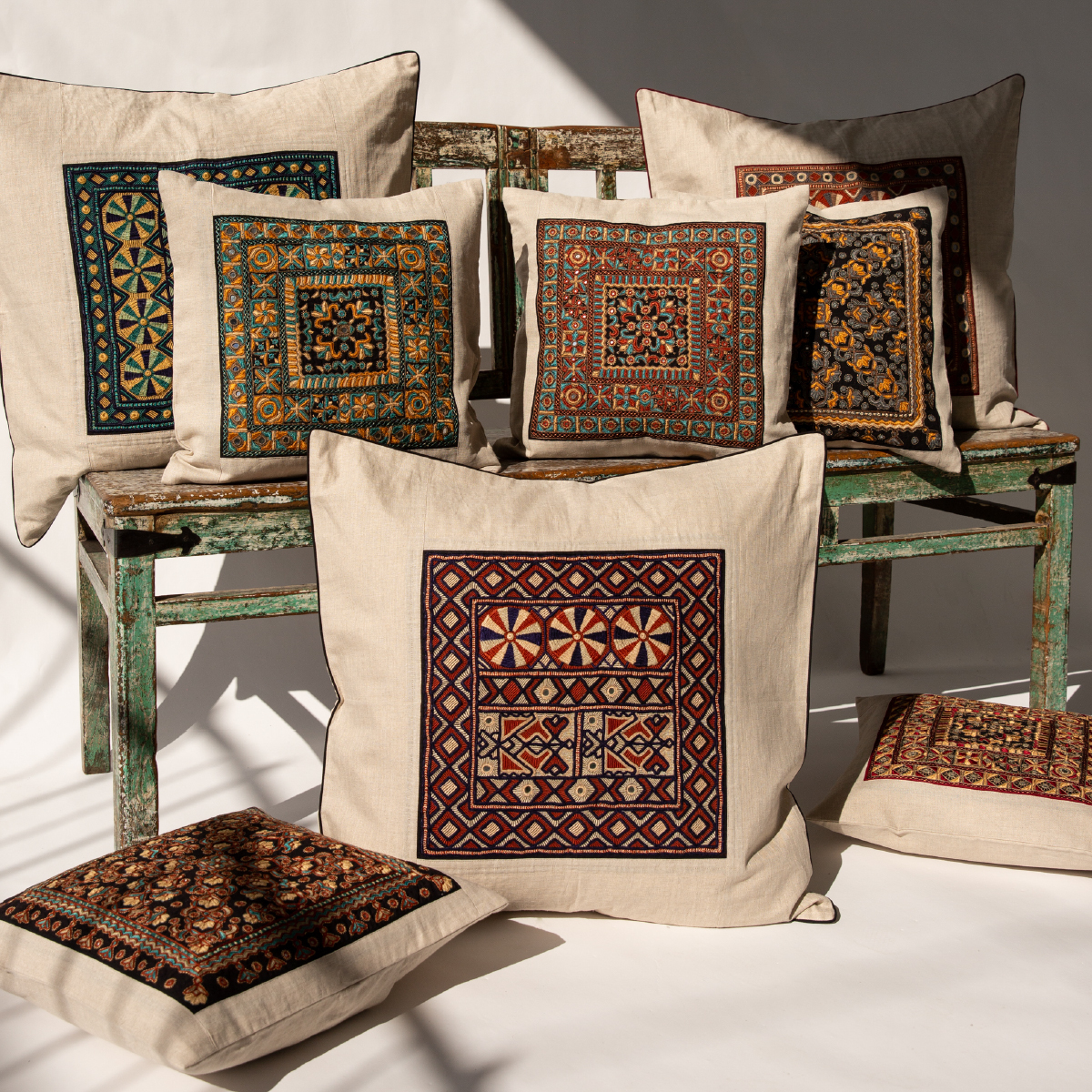
The embroidered works of the famous Dhebaria Rabari community of the Kachchh Desert are evolving. The group enjoys a close relationship with traditional Vankar weavers. Finished weavings are handed off to skilled women who embellish the cloth with distinct Dhebaria Designs. As the weavers began to experiment with lighter toned, natural yarns, the embroiderers didn't miss a beat. They adapted their colours to work on this new lighter ground. It's incredible work. Stitched with a wonderful sense of line and figure. The Dhebaria also bring their distinct sense of stitch to play on milled linen, creating this collection of cushion covers.


See All Scarves & Shawls


See All Bed Covers


See All Embroidered Toss Cushions


See All Scarves & Shawls
See All Bed Covers
See All Embroidered Toss Cushions
See All Bedding


THE EMBROIDERERS OF KACHCHH

The proud stitch-heritage of the Kachchh region shows in every thread of these embroideries. Many ethnic groups are famous for their needlework: Dhebaria and Kutchi Rabari, Dhanetah Jats, Sodha Rajputs, and Mutwa. Each group has a traditional repertoire of figure and motif. These embroideries bring the richness of desert cultures into your hands — heirlooms for the future.

Learn More About the Embroiderers of Kachchh


To our U.S. customers – don't forget that the exchange rate works in your favour, it's like an extra discount. 

Thursday, May 13, 2021 No comments


Tied resist is a traditional technique that has been practiced in India for centuries. The Sanskrit origins of “Bandhani” also give us the term "bandana".  
Each dot is the result of creating a tiny peak in the cloth, and then tightly wrapping thread around the peak to resist the dye. Artisans work with precision as they slowly pattern the entire cloth - a lengthy process with an exquisite outcome.  The shawl becomes a pointallist masterpiece worked in cloth. 
Maiwa works directly with bandhani artisans working in the Kutch Desert of Gujarat, Western India.

See All Scarves & Shawls Here


See All Scarves & Shawls Here


The patterns above are created by applying a hand-tied stitch-resist technique known as bandhani in India and shibori in Japan. After the fabric is all stitched and bound tightly, it is then dipped in natural indigo, oxidized, then dipped again. The fabric is dipped and oxidized a several times to achieve the correct depth of shade, before it is unbound and the patterns are revealed.

The result is a deep, rich indigo patterning with light resisted motifs.

This fabric is handstitched by the bandhani artisans of Bagru, a group that lives and works alongside the dabu block printers. 


See All Shibori Yardage

See All Yardage


To our U.S. customers – don't forget that the exchange rate works in your favour, it's like an extra discount.


Tuesday, May 11, 2021 No comments


Wear it like you mean it - Maiwa's handwoven cotton.

We've taken the genius of handwoven cotton up a notch. We start by yarn dyeing the threads by hand. It's a simple way to play with a subtle variation of the warp and weft. It is also the best way to add stripes in the weave. Some pieces incorporate the ikat technique - a bound resist that takes place as the threads are dyed. In both cases the naturally dyed cotton threads are handwoven by artisan weavers. 

We've designed these garments to show off what cotton can be. Some feature extra wide legs for beautiful swing and movement, all feature handwoven cotton that feels good against your skin and is a pleasure to wear through the seasons.

SEE ALL CLOTHING


SEE ALL CLOTHING


This perfect pouch features drawstring ties and a round bottom so it can stand on its own.  Great for carrying your notebook, lunch, collections, or projects. Made with our favourite heavyweight naturally dyed organic cotton.


SEE ALL EVERYTHING POUCHES


To our U.S. customers – don't forget that the exchange rate works in your favour, it's like an extra discount. 

Friday, May 07, 2021 No comments


For centuries embroidery has been an expression of personality ...

Over the years, working with needle and thread has been, by far, the most enduring form of personal expression; adorning cloth, piecing it together, adding strength and embellishment. In India, embroidery patterns can be so distinct that a child can recognize someone from their village just by the stitch-work on their clothing.


Maiwa has collaborated with artisans to bring the most skillful work into the modern world. The items below all have one thing in common. They were designed to showcase needlework in a way that can be used on a daily basis.


See All Embroidered Cushion Covers


See All Embroidery


See All Embroidered Cushion Covers


See All Embroidery


THE EMBROIDERERS OF KACHCHH


The proud stitch-heritage of the Kachchh region shows in every thread of these embroideries. Many ethnic groups are famous for their needlework: Dhebaria and Kutchi Rabari, Dhanetah Jats, Sodha Rajputs, and Mutwa. Each group has a traditional repertoire of figure and motif. These embroideries bring the richness of desert cultures into your hands — heirlooms for the future.


Learn More About the Embroiderers of Kachchh


To our U.S. customers – don't forget that the exchange rate works in your favour, it's like an extra discount.


Wednesday, May 05, 2021 No comments


REGISTRATION IS OPEN!

Click the button below to enrol in our online workshops.

maiwa.teachable.com 


Learn to successfully mordant cellulose and protein fibres. Work with cloth and yarns to achieve vibrant, clear colours using classic natural dyes.

In this workshop students will make over 18 separate dye-baths on a variety of fibre types (including wool, cotton, linen, silk, and hemp/cotton). The results will be shifted with iron and indigo for a complex palette. Exhaust baths will be used and these will also be shifted with a modified indigo vat. Students will receive an introduction to shaped resist and indigo dyeing. Throughout the course students will receive professional instruction from Maiwa founder Charllotte Kwon and her daughter Sophena Kwon.

• 45 evocative instructional videos.
• Work with 11 natural dyes including indigo.
• Build dye pots from 18 recipes, shift colours with iron and overdye with indigo.
• Complete the course with close to 100 different colours ... and a whole new appreciation for the magic of natural dyes.
The Natural Dye Workshop


Learn the process of making both pigmented and non-pigmented inks, including classics like iron gall ink as well as inks made from natural dyes like cochineal and lake pigments like weld.

In this workshop students will make a range of inks including water soluble and waterproof inks. The workshop will explore papers, and the basis of pointed pen (flexible) writing. Students will learn how to generalize the procedure of ink making so that it may be applied to any organic or mineral matter. The workshop will also present a discussion of journaling, writing, books, and creativity.

• 21 documentary-style instructional videos.
• Work with a range of materials including indigo, carbon black, cochineal, weld, gum Arabic and shellac.
• Learn about ink making as a way to explore materials.
• Consider the history of writing and ink and the future of your own creative practice.

The Ink Making Workshop


Learn to build a range of indigo vats including organic vats made with fruits, the iron vat, and vats made with plants. Learn a wealth of introductory and advanced shaped resist techniques on silk, linen, and cotton. Learn how to handle materials in the dye vat to get the most from indigo.

In this workshop students will be taken, step-by-step, through the process of making a number of indigo vats, including three organic "fruit vats." Students will learn not only how to make a vat but also how to maintain it, revive it, and put it to bed. The different vats will be explored through the use of many forms of shaped resist - including bound, clamp and stitch resist. An astonishing array of patterning is possible through these techniques. Students will learn how to adjust vats for different fibre types and conditions.

• 35 detailed instructional videos.
• All shaped resist techniques shown with clear, step by step instructions.
• Works taken from blank cloth to finished piece so you can see the entire process.
• An in-depth explanation of the chemistry of indigo extraction and indigo vats so you can learn how and why they work.
• Discover why indigo is the worlds most magical dye.

Journey Into Indigo


The Maiwa School of Textiles Online is ready for our registration day on Monday, May 3rd beginning at 10am (PST)

When registration opens you will also be able to give these workshops as gifts!


Make sure you are subscribed to our email list.
Keep an eye on schooloftextiles.com for updates.


Monday, May 03, 2021 No comments


REGISTRATION
IS RIGHT AROUND THE CORNER!

Registration opens on Monday, May 3rd at 10am (Pacific Time)
At 10am you will see the registration buttons appear on each course page.
(You may need to refresh your browser window to see the button)


Maiwa Workshops Online

These are in-depth workshops delivered through engaging high-definition videos. Our Instructors skillfully guide students accompanied by detailed notes and student Q&A sections. At the end of each workshop students may participate in an optional Zoom meeting.   

Workshops commence in June but students are free to work at their own pace. New content is delivered on a weekly basis until the course is complete. Students have access to workshops for three years from the date of purchase.

Our workshops are delivered on the teachable platform. To get a sense of how it works you may enroll in any of our seven free workshops.


maiwa.teachable.com


Learn to successfully mordant cellulose and protein fibres. Work with cloth and yarns to achieve vibrant, clear colours using classic natural dyes.

In this workshop students will make over 18 separate dye-baths on a variety of fibre types (including wool, cotton, linen, silk, and hemp/cotton). The results will be shifted with iron and indigo for a complex palette. Exhaust baths will be used and these will also be shifted with a modified indigo vat. Students will receive an introduction to shaped resist and indigo dyeing. Throughout the course students will receive professional instruction from Maiwa founder Charllotte Kwon and her daughter Sophena Kwon.

• 45 evocative instructional videos.
• Work with 11 natural dyes including indigo.
• Build dye pots from 18 recipes, shift colours with iron and overdye with indigo.
• Complete the course with close to 100 different colours ... and a whole new appreciation for the magic of natural dyes.
The Natural Dye Workshop


Learn the process of making both pigmented and non-pigmented inks, including classics like iron gall ink as well as inks made from natural dyes like cochineal and lake pigments like weld.

In this workshop students will make a range of inks including water soluble and waterproof inks. The workshop will explore papers, and the basis of pointed pen (flexible) writing. Students will learn how to generalize the procedure of ink making so that it may be applied to any organic or mineral matter. The workshop will also present a discussion of journaling, writing, books, and creativity.

• 21 documentary-style instructional videos.
• Work with a range of materials including indigo, carbon black, cochineal, weld, gum Arabic and shellac.
• Learn about ink making as a way to explore materials.
• Consider the history of writing and ink and the future of your own creative practice.

The Ink Making Workshop


Learn to build a range of indigo vats including organic vats made with fruits, the iron vat, and vats made with plants. Learn a wealth of introductory and advanced shaped resist techniques on silk, linen, and cotton. Learn how to handle materials in the dye vat to get the most from indigo.

In this workshop students will be taken, step-by-step, through the process of making a number of indigo vats, including three organic "fruit vats." Students will learn not only how to make a vat but also how to maintain it, revive it, and put it to bed. The different vats will be explored through the use of many forms of shaped resist - including bound, clamp and stitch resist. An astonishing array of patterning is possible through these techniques. Students will learn how to adjust vats for different fibre types and conditions.

• 35 detailed instructional videos.
• All shaped resist techniques shown with clear, step by step instructions.
• Works taken from blank cloth to finished piece so you can see the entire process.
• An in-depth explanation of the chemistry of indigo extraction and indigo vats so you can learn how and why they work.
• Discover why indigo is the worlds most magical dye.

Journey Into Indigo


The Maiwa School of Textiles Online is ready for our registration day on Monday, May 3rd beginning at 10am (PST)

Click the button below to see all our online workshops.

maiwa.teachable.com


Make sure you are subscribed to our email list.
Keep an eye on schooloftextiles.com for updates.
 

Saturday, May 01, 2021 No comments
Newer Posts
Older Posts

Subscribe to our mailing list

* indicates required
Send me emails about Maiwa

Labels

Bags & Pouches Bandanas Banjara Bedding Bengal Weaving Block Print Dyeable Blanks Dyeable Clothing Embroidery Embroidery Supplies Exhibition Free Resources Handwoven Interiors Jawaja Carpets Jawaja Leather Kala Cotton Lecture Maiwa Books Maiwa Foundation Maiwa School of Textiles Merchant & Mills Natural Dye Kits Natural Dyes Quiet Manifesto Quilts & Blankets Scarves & Shawls Slow Clothes Table Cloths & Napkins Travel Yardage indigo

About Maiwa

Find out Who We Are ...

Voices On Cloth

Maiwa Podcasts


Maiwa Podcasts

Follow Us

Popular Posts

  • Natural Dyes - About The Organic Indigo Vat
    The Maiwa Guide to Natural Dyes What they are and how to use them These organic vats were originally developed by French dye chemist and...
  • Natural Dyes - Mordants Part 1
    The Maiwa Guide to Natural Dyes What they are and how to use them We've divided the section on Mordants into three parts. We start...
  • Natural Dyes - Mordants Part 3
    The Maiwa Guide to Natural Dyes What they are and how to use them Cotton mordanted with alum. How To Mordant Here we give the pro...
  • Natural Dyes - Scouring
    The Maiwa Guide to Natural Dyes What they are and how to use them Proper scouring is absolutely essential to good dyeing. Improperly sc...
  • Natural Dyes - Mordants Part 2
    The Maiwa Guide to Natural Dyes What they are and how to use them In our previous post we explained why mordanting was necessary and l...
  • Natural Dyes - Our Approach
    The Maiwa Guide to Natural Dyes What they are and how to use them Our Approach to Dyeing Some thoughts on fugative colour and colour wi...
  • Natural Dyes - Indigo, The Fruit Vat
    The Maiwa Guide to Natural Dyes What they are and how to use them This post give the recipe and procedure to make an organic indigo vat...

Blog Archive

  • ▼  2026 (25)
    • ▼  April (1)
      • A Limited Offering — Kantha Quilt Jackets
    • ►  March (9)
    • ►  February (6)
    • ►  January (9)
  • ►  2025 (115)
    • ►  December (11)
    • ►  November (11)
    • ►  October (11)
    • ►  September (9)
    • ►  August (11)
    • ►  July (11)
    • ►  June (8)
    • ►  May (9)
    • ►  April (10)
    • ►  March (7)
    • ►  February (8)
    • ►  January (9)
  • ►  2024 (108)
    • ►  December (11)
    • ►  November (9)
    • ►  October (9)
    • ►  September (8)
    • ►  August (11)
    • ►  July (9)
    • ►  June (6)
    • ►  May (9)
    • ►  April (10)
    • ►  March (8)
    • ►  February (9)
    • ►  January (9)
  • ►  2023 (108)
    • ►  December (12)
    • ►  November (6)
    • ►  October (9)
    • ►  September (8)
    • ►  August (12)
    • ►  July (8)
    • ►  June (9)
    • ►  May (9)
    • ►  April (9)
    • ►  March (9)
    • ►  February (8)
    • ►  January (9)
  • ►  2022 (111)
    • ►  December (13)
    • ►  November (9)
    • ►  October (8)
    • ►  September (9)
    • ►  August (11)
    • ►  July (8)
    • ►  June (9)
    • ►  May (9)
    • ►  April (9)
    • ►  March (10)
    • ►  February (8)
    • ►  January (8)
  • ►  2021 (105)
    • ►  December (9)
    • ►  November (9)
    • ►  October (9)
    • ►  September (8)
    • ►  August (8)
    • ►  July (8)
    • ►  June (11)
    • ►  May (9)
    • ►  April (10)
    • ►  March (8)
    • ►  February (8)
    • ►  January (8)
  • ►  2020 (94)
    • ►  December (11)
    • ►  November (12)
    • ►  October (11)
    • ►  September (9)
    • ►  August (7)
    • ►  July (9)
    • ►  June (7)
    • ►  May (8)
    • ►  April (9)
    • ►  March (4)
    • ►  February (1)
    • ►  January (6)
  • ►  2019 (69)
    • ►  December (7)
    • ►  November (4)
    • ►  October (6)
    • ►  September (11)
    • ►  August (3)
    • ►  July (5)
    • ►  June (4)
    • ►  May (5)
    • ►  April (5)
    • ►  March (7)
    • ►  February (5)
    • ►  January (7)
  • ►  2018 (71)
    • ►  December (6)
    • ►  November (5)
    • ►  October (14)
    • ►  September (6)
    • ►  August (5)
    • ►  July (5)
    • ►  June (6)
    • ►  May (7)
    • ►  April (5)
    • ►  March (2)
    • ►  February (5)
    • ►  January (5)
  • ►  2017 (73)
    • ►  December (6)
    • ►  November (8)
    • ►  October (11)
    • ►  September (10)
    • ►  August (7)
    • ►  July (7)
    • ►  June (4)
    • ►  May (5)
    • ►  April (6)
    • ►  March (3)
    • ►  February (4)
    • ►  January (2)
  • ►  2016 (47)
    • ►  December (4)
    • ►  November (4)
    • ►  October (5)
    • ►  September (12)
    • ►  July (2)
    • ►  June (2)
    • ►  May (4)
    • ►  April (2)
    • ►  March (3)
    • ►  February (5)
    • ►  January (4)
  • ►  2015 (136)
    • ►  December (5)
    • ►  November (35)
    • ►  October (13)
    • ►  September (12)
    • ►  August (3)
    • ►  July (5)
    • ►  June (5)
    • ►  May (19)
    • ►  April (28)
    • ►  March (3)
    • ►  February (3)
    • ►  January (5)
  • ►  2014 (93)
    • ►  December (1)
    • ►  November (2)
    • ►  October (10)
    • ►  September (10)
    • ►  July (1)
    • ►  June (4)
    • ►  May (26)
    • ►  April (27)
    • ►  March (3)
    • ►  February (3)
    • ►  January (6)
  • ►  2013 (112)
    • ►  December (2)
    • ►  November (1)
    • ►  October (7)
    • ►  September (8)
    • ►  August (8)
    • ►  July (5)
    • ►  June (3)
    • ►  May (11)
    • ►  April (52)
    • ►  March (3)
    • ►  February (5)
    • ►  January (7)
  • ►  2012 (108)
    • ►  December (5)
    • ►  November (5)
    • ►  October (8)
    • ►  September (10)
    • ►  August (3)
    • ►  July (6)
    • ►  June (2)
    • ►  May (25)
    • ►  April (27)
    • ►  March (7)
    • ►  February (5)
    • ►  January (5)
  • ►  2011 (126)
    • ►  December (4)
    • ►  November (3)
    • ►  October (11)
    • ►  September (9)
    • ►  August (3)
    • ►  July (6)
    • ►  June (5)
    • ►  May (39)
    • ►  April (23)
    • ►  March (8)
    • ►  February (8)
    • ►  January (7)
  • ►  2010 (123)
    • ►  December (8)
    • ►  November (8)
    • ►  October (6)
    • ►  September (11)
    • ►  August (7)
    • ►  July (9)
    • ►  June (16)
    • ►  May (17)
    • ►  April (15)
    • ►  March (10)
    • ►  February (7)
    • ►  January (9)
  • ►  2009 (141)
    • ►  December (7)
    • ►  November (11)
    • ►  October (13)
    • ►  September (10)
    • ►  August (12)
    • ►  July (11)
    • ►  June (11)
    • ►  May (29)
    • ►  April (32)
    • ►  March (5)